
OFFICIAL

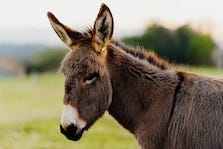
Heart turned the air leaden. The great gate’s enormous stones hovered above the line that moved like honey dripping in winter. His donkey shook its head and flapped its ears to drive the flies away. What new rules would be announced because they grew like weeds. He was born behind these very gates. He traveled, seeking books to sell. This made him suspicious. At the gate, the guard, covered with his big cape, his hat, his scarf, peered at him the one hand on the sword the length of his leg. An officious assistant sat at a temporary desk covered with tags and pots and brushes and stamps. “Zeno Sifakas,” he replied when asked. “I’ve been to Old Plampus, New Rangor, and the cities beneath the great Triadic Mountains.” “Are they laughing at us or do they quake when you say the name Zeno Sifakas from Great Barbody?” “Quayquag, more brilliant than the sun is spoken of in the cafes and the palaces and by the cattle herders with care as if a calamity could happen.” “What is in the sacks strapped to your donkey?” “Books.” “What sort? We may not want them here.” “There are books on why things are the way they are and how things fit together, books about curing your horse’s colic, improving your marriage bed, cookbooks of the exotic and delicious, manuals on sheep afflictions, stories about thieves, star-crossed lovers, adventures in wild, unknown lands, a tragic tale of a man’s fall from grace, and a story about a dog that can talk.”
The man at the low table puffed out his cheeks and shook his head. “All such matters must pass before the eyes of the censors under the watchtower, who will fix their stamp of approval or feed it to the pigs. Now put your bare left foot on this stone beside my table.” The squat man picked up a fat brush, dipped it into a pot of blue, and painted the man’s foot. And he took a strip of white cloth, tied it around his ankle, and painted the knot red. “If you’re found without this cloth around your ankle, you’ll spend the night composing praises for Quayquag. If they’re deemed unworthy, you will be tossed in a hole and forgotten. I’ve counted your books and I’ve sealed your sacks just in case your tale of the dog who talks is the kind that stirs up the stink of trouble, criticizing the Wonder of Our Time. Should there be such a dog, you will be made blind and tied to a stake as a warning. Give this to the censors in one hour.” With a truculent shrug and a wave of his head, he pressed a metal token into his hand, squeezing to see if he would wince.
One to the next embroidered around her neck. She was there in the square under a tree. Brilliantly embroidered cloths laid out on a table drew a small crowd, admiring and haggling over the price with a tall woman. Raven hair fell to her waist; black eyes, pierced each face unafraid and caused men to stammer. They called her the brass kettle. Few men dared to approach and flirt or make small talk. Their words flew out fat with hope, but then faltered, turned to dust, taken away by the wind. Her dress, a shimmering forest green, cinched at the waist with an embroidered belt showing children chasing, somersaulting, reading, and sleeping. Circe of Kythno’s hands wouldn’t rest, touching her hair, her belt, tugging each sleeve. She noticed Zeno tying his donkey to a tree, fetching water and grain, and scratching its long ears. Suddenly she announced firm prices in a take it or leave it tone. Soon, every piece marched away, leaving her purse full. She caught Zeno’s eyes and nodded toward a passageway where she disappeared without looking back. Zeno led his donkey into a dingy stable. When he turned, she was in his arms. Then she broke away, knelt by one of the sacks and with skilled fingers unwove a hole and extracted the Talking Dog on the cover, but a manual of resistance calling on the hands that did the work to throw the bloated Quayquag into the Crevasse of Thorns. From beneath her skirt, a real talking dog story appeared, inserted in the sack, and rewoven.
The censor picked through the books in the two sacks. “Why was there no poetry praising his Greater Than Ever and Ever doings?” Zeno reminded the censor, a pale man in a long embroidered coat with sharp fingernails and watery eyes, that The One Who Can Make No Mistakes had purged all the poets in the past year and burned their books. The censor, Blursty, looked at Zeno and Zeno looked at Blursty playing deadpan, his reddish hair drooped down on one side into a curl nestled against his cheek. Then both erupted in raucous laughter. Tears dripped off the censor’s nose. When Zeno left, each book and each page bore the censor’s stamp. Donkey’s big head pushed against his back to make him go faster to the stable for water and food. In the hayloft, a false partition shielded a group of men and women sitting in a circle. Zero took a seat. The manual, Many Hands Cut the Grass, passed from one to the other until each memorized a section. At morning, the books’ ashes cooled under a cooking grate.
Donkey stands waiting outside a low mud and brick building. More white hairs sprout around his ears and nose. The whiskers can mark a wedding and a birth. The word BOOKS hang on a freshly painted sign above a blue door. In a rectangular window, just tall enough to peer inside, a written sign lists: stories historic, fiery, cool, stinging, crossed, mashed, lofty, crushed, and crashed. Poetry by weight. A shaft of sun warms Donkey’s back. The door opens, and a child fourish years old, of one sex or the other, carries a warm muffin, and walks to Donkey and hugs one leg. Donkey lies down, and the raven-haired child dressed in pantaloons tied with red ribbons at the ankles, a coat embroidered with running kicking donkeys, sits nestling against Donkey’s side and chews on his share of the muffin. Circe, in a sun-yellow dress with a circle of hands clasping each other embroidered around the neck, came out with a glass of juice and a carrot. She and the child talk and drink the juice. The child takes the carrot and feeds it to Donkey, explaining how this is better for him than the muffin. Zeno, in a blue striped shirt with a row of red thorns sewn at its hem, joins them, carrying a tray with coffee and fruit. If you sat next to Zeno, you’d see a small, embroidered body falling between each stripe to the thorns below. He sits beside Circe, resting against Donkey. While they talk, their child sings and draws a circle with flourishes with a stick in the dirt enclosing the three in his heart, and Donkey dozes.
The energy of the crowd tore through the streets. Her heart raced as she felt shoulder and hands touching and pulling. The Great Fall Festival opened with a parade of farmers, herders, and butchers escorting women carrying the pride of newborn sheep, goats, horses, and cattle. Circe looked down; a bolt of pride squared her shoulders. A blinding white apron draped over the weight in her arms. Men wore hand-woven long coats marked with a symbol of their craft. She strained to find Zeno. He appeared, then nowhere. She felt the weight of the full ddress;its colors reflected the ripeness of a harvest squash, beans, or berries. Hers the flag waving red of strawberry. The parade ended at the foot of Quayquag on a dais, an offering, the newborns, covered by aprons until unveiled when Q stepped forward in a gesture of thanks. The crowd chanted prayers for new birth. Circe felt unearthly as she let her apron fall to the floor, revealing a dead child cradled in each woman’s arms. Rage filled her as Q screamed for the guards to cut them down. The guards from Ragnor at once stepped between Q and Circe. She turned to see the women bare their breasts, daring the guards to kill them. The warriors of Ragnor lived by a code. Q screamed, stamping his fat legs, so his belly wobbled, saliva flew off his lips. She called to Zeno, who rushes past the guards, strips the quivering leader; a pot of blue and its brush fly into his hands. He paints Q, ties a blindfold around his eyes, and colors the knot red.
A loud bang caused Circe to leap up, arms high, expecting a blow. The room took shape around her. Zeno slept with one arm across his chest. A cool wind blew through her nightdress; a window banged. She kissed their child, then walked outside. A knot of fear gripped her throat. She shivered, Donkey’s head presses against her cheek and rests on her chest. She strokes his brow as tears drop on her arm.